About · emote
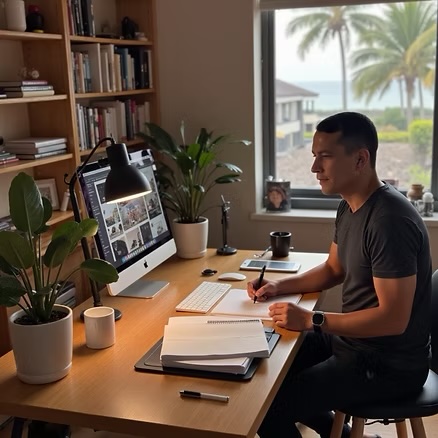
Aloha, I'm Roger 🤙🏽
UX researcher, early riser, and bird person designing systems that remember humans.
I was raised in Hawaiʻi, where interconnection is the default setting. People, place, and histories are woven together, not isolated. That lens shaped how I see design: every interface is part of a much larger story about trust and power.
I've spent years as a Senior UX Researcher & Designer working on complex products in healthcare and enterprise software. My favorite work lives in the quiet middle: listening to people, mapping emotional journeys, and translating what we learn into more humane systems.
I'm an early riser; most mornings I'm awake before sunrise, listening for the first birds. The dawn chorus starts as a few tentative calls, swells into overlapping signals and responses, then settles into a shared rhythm. It's a living model of a responsive emotional system: each voice adjusting to the others so the whole flock stays in sync. emote borrows its ambition from that conversation.
Why emote
As researchers, we ask people hard things. We collect their fears, hopes, and coping strategies. We map the spikes of anxiety and the rare moments of relief. Then those maps get compressed into bullet points and Jira tickets while the emotional reality drifts into the archive.
emote is my refusal to let that work vanish. It treats emotional journeys as architecture, not ephemera. Patterns and tokens give teams a shared vocabulary for emotional intelligence, so “good behavior” doesn't live only in someone's head, or get lost between handoffs.
And especially now: I don't want to leave it up to AI models to decide how to respond. Systems should be intentional about how they handle fragile moments. They should protect autonomy, reduce harm, and repair trust when they get it wrong.
That's the mantra here: be intentional, not sycophantic.